Accountability Begins with Order: What Really Happened at the Last MSA Meeting
The October MSA meeting raised more questions than it answered — questions about leadership, transparency, and adherence to our own bylaws.
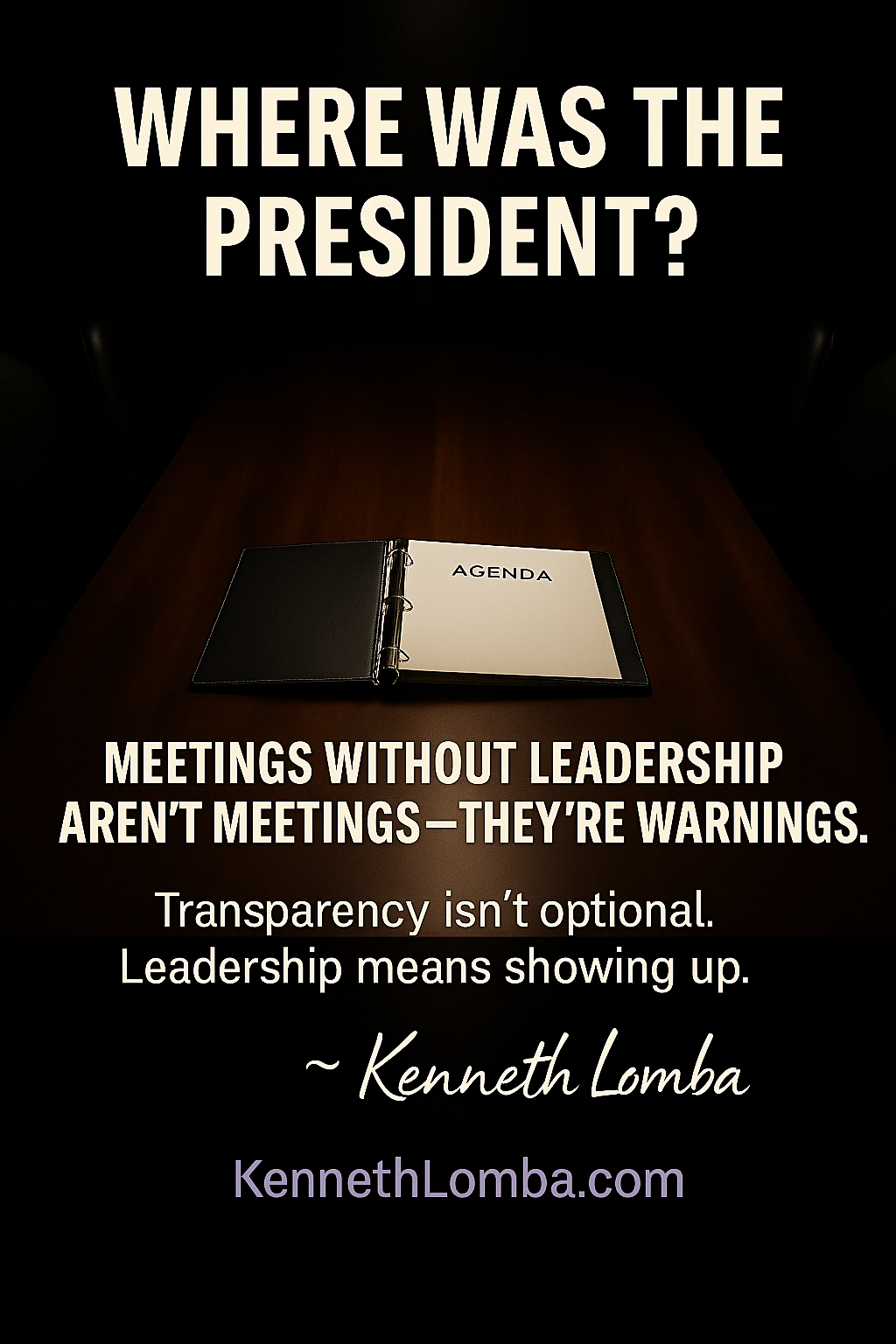
1. Where Was the President?
The most basic question of any organized body is: who's presiding?
At this meeting, no one clarified who was chairing or whether the Vice President had been formally designated under the bylaws to run the session. The meeting simply started — with no structure, no formal call to order, and no acknowledgment of the President's absence.
If there was an emergency or a legitimate reason the President could not attend, the members were never told. Without a clear chain of authority, such a meeting borders on procedurally invalid under both parliamentary principles and the MSA's own bylaws.
2. The Nomination and Validation Confusion
The Vice President did not announce the names of candidates for Vice President until directly asked. Why not?
The bylaws are clear that nominations must be validated and announced publicly — not hidden or delayed.
Validation was required to be completed by September 30, yet the results were not presented or even mentioned. When asked, the Vice President appeared unsure of the election committee's role and responsibilities.
If the election committee exists to ensure fairness and compliance, how can members have confidence when their duties are not clearly understood — or publicly acknowledged?
3. Financial Transparency — or Lack Thereof
Another serious concern emerged when the financial report was given verbally, without supporting documentation. No balance sheet. No profit and loss. No receipts, invoices, or account statements were displayed or distributed to members.
Why is the Treasurer reportedly the only person with access to these records?
Under California Corporations Code §8320, every director — and by extension, every member of a mutual benefit corporation — has the right to inspect financial records and minutes.
Providing numbers verbally, without documentation, undermines accountability. Members deserve to see where their dues are going — in writing. Transparency is not optional; it's a fiduciary obligation.
4. No Adjournment, No Closure
The meeting ended abruptly — without a formal motion to adjourn, without a vote, and without proper closure.
This is not just poor form; it reflects a breakdown in procedure. A meeting that isn't officially adjourned leaves its record incomplete and its decisions open to challenge.
5. A Pattern of Bypassing Process?
Taken together, these events raise serious concerns:
- Why were nomination notices delayed until the last minute?
- Why were candidate names withheld until questioned?
- Why are financial records inaccessible to members?
- Why was there no structure, no accountability, and no closure?
If this is a pattern — of avoiding transparency, skipping process, and centralizing control — then the MSA is at risk of drifting from its purpose as a member-driven association into a closed circle of authority.
The Bigger Picture
This isn't just about one meeting. It's about how our association governs itself.
The MSA exists to protect and represent supervisors — not to operate behind closed doors, not to minimize member participation, and not to improvise process as it goes along.
California law, MSA bylaws, and common sense all demand the same thing: transparency, accountability, and fair process.
If these standards aren't being met, it's up to the members to demand that they are.
Final Thought
Leadership isn't just holding a title.
Leadership means showing up, knowing the rules, and following them.
~ Kenneth Lomba